Introduction
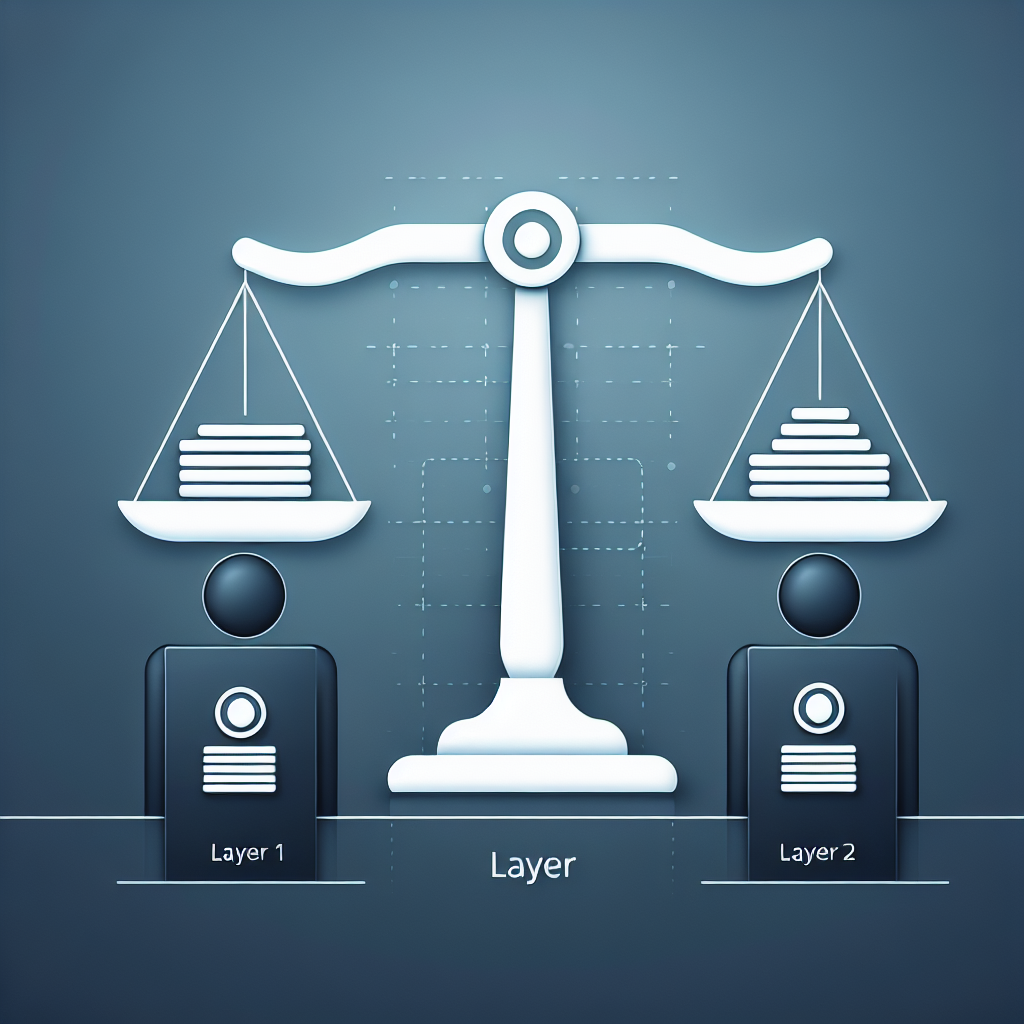
Decentralized Finance (DeFi) has emerged as a revolutionary force in the financial world, leveraging blockchain technology to offer financial services without intermediaries. As DeFi continues to grow, the scalability and efficiency of the underlying blockchain networks have become increasingly important. This has led to the development of Layer 1 and Layer 2 solutions, both of which aim to enhance the performance of blockchain networks. In this article, we’ll explore the key differences between Layer 1 and Layer 2 DeFi solutions, examining their roles, advantages, and challenges.
Understanding Layer 1 Solutions
Layer 1 refers to the base layer of a blockchain network. It is the foundational protocol that defines the rules and functionality of the blockchain. Examples of Layer 1 blockchains include Ethereum, Bitcoin, and Binance Smart Chain. These blockchains host the core functions, such as consensus mechanisms, transaction validation, and smart contract execution.
Characteristics of Layer 1
Layer 1 blockchains are responsible for ensuring security, decentralization, and maintaining the immutable ledger. They serve as the backbone of DeFi applications, providing the infrastructure needed for decentralized applications (dApps) to operate. Key characteristics of Layer 1 solutions include:
- Security: Layer 1 networks are designed to be highly secure, using consensus mechanisms like Proof of Work (PoW) or Proof of Stake (PoS) to validate transactions and prevent fraud.
- Decentralization: These networks are typically decentralized, meaning no single entity has control over the blockchain, promoting transparency and trustlessness.
- Scalability Challenges: As more users engage with DeFi applications, Layer 1 blockchains often face scalability issues, leading to congestion and high transaction fees.
Layer 2 Solutions: An Overview
Layer 2 solutions are built on top of Layer 1 blockchains to address their scalability challenges. They aim to enhance network efficiency by offloading some of the computational work from the main blockchain. Layer 2 solutions include technologies like sidechains, state channels, and rollups.
Characteristics of Layer 2
Layer 2 solutions provide an additional layer of scalability and efficiency without compromising the security and decentralization of the underlying Layer 1 blockchain. Key characteristics include:
- Improved Scalability: By processing transactions off-chain, Layer 2 can significantly increase the throughput of the network, reduce congestion, and lower transaction costs.
- Interoperability: Layer 2 solutions can be designed to work across multiple Layer 1 blockchains, enhancing the interconnectedness of different DeFi ecosystems.
- Security Inheritance: Many Layer 2 solutions inherit the security properties of the underlying Layer 1 blockchain, ensuring that transactions remain secure.
Key Differences Between Layer 1 and Layer 2 DeFi
Scalability
The primary difference between Layer 1 and Layer 2 solutions lies in their approach to scalability. Layer 1 blockchains often struggle with scalability as they grow, resulting in slower transaction times and higher fees. Layer 2 solutions address this by processing transactions off-chain and then settling them on the Layer 1 blockchain, thus improving the overall scalability of the network.
Transaction Speed and Cost
Layer 1 solutions can be limited in terms of transaction speed and cost efficiency, especially during periods of high demand. Layer 2 solutions, by contrast, offer faster and cheaper transactions by reducing the computational load on the Layer 1 network. This makes Layer 2 ideal for applications that require high-frequency trading or microtransactions.
Security
Both Layer 1 and Layer 2 solutions prioritize security, but they achieve it differently. Layer 1 relies on robust consensus mechanisms to ensure network security, while Layer 2 solutions often inherit the security properties of the underlying Layer 1 blockchain. However, the additional complexity of Layer 2 solutions can introduce new security vulnerabilities that need to be managed carefully.
Decentralization
Layer 1 blockchains are inherently decentralized, as they form the base layer of the network. Layer 2 solutions can be designed with varying degrees of decentralization, depending on their architecture and implementation. Some Layer 2 solutions may involve trusted parties or validators, which can introduce centralization risks.
Interoperability
Layer 2 solutions often provide greater interoperability between different blockchains, enabling DeFi applications to operate across multiple networks. This is achieved through cross-chain communication protocols and interoperability standards, which allow assets and data to move seamlessly between chains.
Current and Emerging Layer 2 Solutions
As the DeFi ecosystem continues to evolve, several Layer 2 solutions have gained prominence:
Rollups
Rollups are a popular Layer 2 scaling solution that aggregates multiple transactions into a single batch, which is then submitted to the Layer 1 blockchain. Rollups come in two main types: Optimistic Rollups and ZK-Rollups. Optimistic Rollups assume transactions are valid by default, while ZK-Rollups use zero-knowledge proofs to ensure transaction validity.
State Channels
State channels allow participants to conduct multiple transactions off-chain, with only the initial and final states recorded on the Layer 1 blockchain. This reduces the number of on-chain transactions, increasing scalability and reducing costs.
Sidechains
Sidechains are independent blockchains that run parallel to the main Layer 1 blockchain. They are designed to be compatible with the main chain, allowing for the transfer of assets and data between chains. Sidechains provide flexibility and scalability, but they may have differing security models from the main chain.
The Future of Layer 1 and Layer 2 DeFi
The future of DeFi will likely involve a combination of Layer 1 and Layer 2 solutions working in tandem to provide a scalable, secure, and efficient ecosystem. As the DeFi space continues to innovate, new solutions will emerge to address the evolving needs of users and developers.
Layer 1 Improvements
Layer 1 blockchains are continually improving their scalability, security, and functionality. For example, Ethereum is transitioning from a Proof of Work to a Proof of Stake consensus mechanism, which is expected to improve scalability and reduce energy consumption.
Layer 2 Innovation
Layer 2 solutions will continue to evolve, with new technologies and protocols being developed to enhance scalability, interoperability, and user experience. As the ecosystem matures, we can expect greater collaboration and integration between different Layer 2 solutions.
Conclusion
Layer 1 and Layer 2 solutions play complementary roles in the DeFi ecosystem, each offering unique benefits and addressing specific challenges. While Layer 1 provides the foundational security and decentralization, Layer 2 enhances scalability and efficiency. As DeFi continues to grow, the interplay between these layers will be crucial in shaping the future of decentralized finance. Understanding the key differences and benefits of each layer is essential for developers, investors, and users navigating the dynamic world of DeFi.
#ChatGPT assisted in the creation of this article.