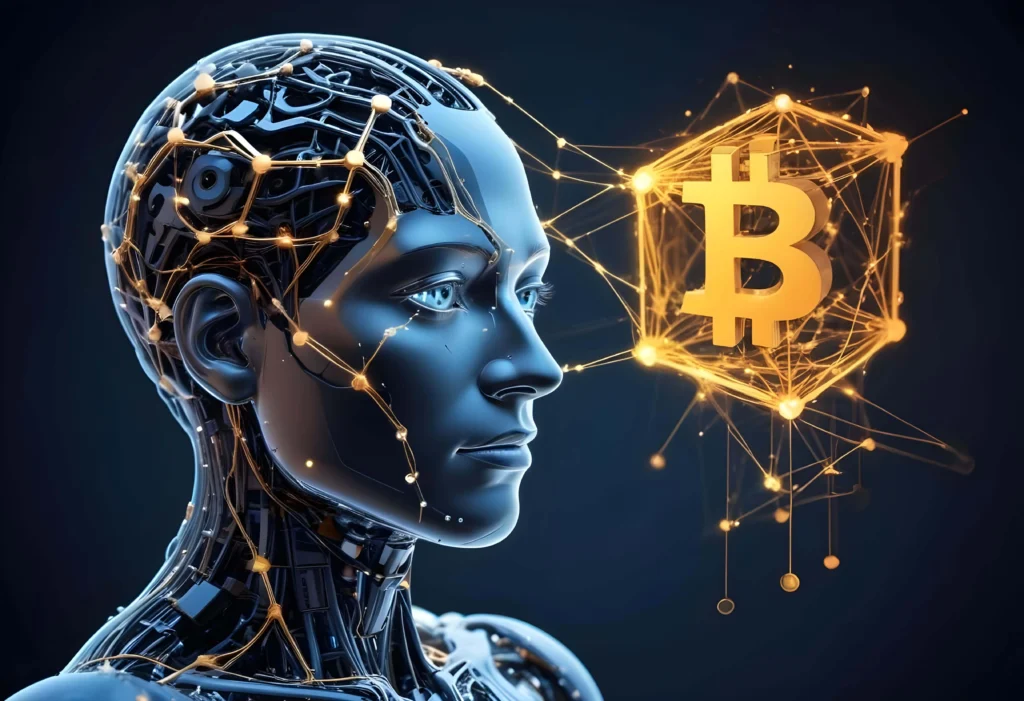
Blockchain technology, since its inception, has been lauded for its potential to create transparent and tamper-proof systems. However, the complexity and sheer volume of data on blockchains pose significant challenges for analysis. Enter Artificial Intelligence (AI) – a technology that is transforming industries with its ability to learn from and make sense of vast amounts of data. The convergence of AI and blockchain analytics promises to revolutionize how we understand and utilize blockchain data. In this article, we explore the synergies between AI and blockchain analytics and discuss how advanced AI techniques are transforming this space.
The Challenges of Blockchain Analytics
Blockchain networks generate enormous volumes of data, with each transaction being a part of a permanent and immutable record. While this is beneficial for transparency and trust, it presents significant challenges in terms of data processing and analysis. Traditional data analysis tools are often inadequate for handling the decentralized and distributed nature of blockchain data. Key challenges include:
Volume and Complexity
Blockchain networks like Bitcoin and Ethereum process millions of transactions per day, resulting in massive datasets. Analyzing these transactions to extract meaningful insights requires sophisticated tools capable of handling high data volume and complexity.
Data Heterogeneity
Different blockchain networks use varying protocols and data structures. This heterogeneity poses challenges in standardizing data analysis processes across multiple platforms.
Real-time Analysis
The dynamic nature of blockchain necessitates real-time analysis for applications like fraud detection and market prediction. Traditional methods struggle to provide timely insights.
The Role of AI in Blockchain Analytics
AI offers a powerful solution to the challenges of blockchain analytics. By leveraging machine learning algorithms, neural networks, and other AI techniques, it’s possible to automate and enhance the analysis process. Here’s how AI is revolutionizing blockchain analytics:
Pattern Recognition and Anomaly Detection
AI excels at recognizing patterns within large datasets. In blockchain analytics, AI can identify transaction patterns, detect anomalies, and flag suspicious activities, helping in fraud detection and compliance monitoring.
Predictive Analytics
By analyzing historical blockchain data, AI can identify trends and make predictions about future market behavior. This capability is invaluable for traders and investors looking to make informed decisions.
Natural Language Processing (NLP)
NLP, a subset of AI, can process and analyze textual data from blockchain transactions and smart contracts. This allows for the extraction of relevant information and insights from unstructured data sources.
Advanced AI Techniques in Blockchain Analytics
As AI continues to evolve, advanced techniques are being developed to further enhance blockchain analytics. Some of these techniques include:
Deep Learning
Deep learning models, such as convolutional neural networks (CNNs) and recurrent neural networks (RNNs), can analyze complex transaction data with high accuracy. These models can uncover hidden patterns that traditional methods might miss.
Federated Learning
Blockchain’s decentralized nature aligns well with federated learning, an AI technique where models are trained across multiple decentralized devices without sharing data. This preserves privacy while still benefiting from collective insights.
Reinforcement Learning
Reinforcement learning can optimize blockchain networks by automatically adjusting parameters to improve efficiency and performance. It can be used for tasks such as transaction validation and network congestion management.
Real-world Applications
The fusion of AI and blockchain analytics has already begun to impact various industries. Here are a few real-world applications:
Financial Services
In finance, AI-driven blockchain analytics can enhance risk assessment, fraud detection, and compliance monitoring. By analyzing transaction patterns and behaviors, financial institutions can mitigate risks and improve customer trust.
Supply Chain Management
Blockchain’s transparency, combined with AI’s predictive capabilities, can optimize supply chain operations. Companies can track products in real-time, predict demand fluctuations, and ensure authenticity and quality.
Healthcare
AI-enhanced blockchain can secure patient data and streamline medical record management. By analyzing blockchain-stored health data, AI can provide insights into treatment effectiveness and patient outcomes.
The Future of AI in Blockchain Analytics
The integration of AI in blockchain analytics is still in its early stages, but the potential is immense. As AI technology advances, we can expect even more sophisticated analytics tools that offer deeper insights, better decision-making, and enhanced security.
Increased Automation
Future AI systems will automate more complex tasks, reducing the need for human intervention and increasing the efficiency of blockchain analytics.
Enhanced Security
AI will continue to play a critical role in securing blockchain networks. Advanced AI models will detect and respond to threats more rapidly and accurately.
Interoperability
AI can facilitate interoperability between different blockchain platforms by standardizing data formats and protocols, enabling more seamless data exchange.
Conclusion
The revolution of blockchain analytics with advanced AI is not just a possibility; it’s an unfolding reality. By addressing the inherent challenges of blockchain data, AI is unlocking new opportunities for innovation and growth across various sectors. As AI technology continues to evolve, its integration with blockchain will undoubtedly lead to more groundbreaking developments, ultimately making blockchain analytics more powerful, accurate, and accessible than ever before.