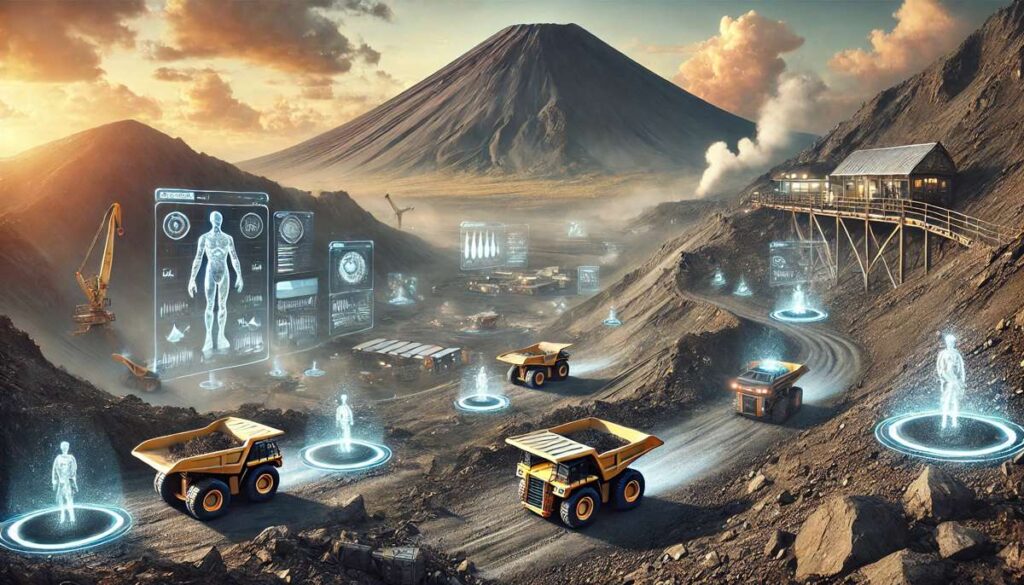
The mining industry, a cornerstone of global economic infrastructure, has long been perceived as a traditional sector, heavily reliant on manual labor and conventional methods. However, in recent years, technological advancements have begun to permeate this field, ushering in a new era of efficiency and innovation. Among these advancements, Artificial Intelligence (AI) stands out as a transformative force, enabling unprecedented levels of operational efficiency, safety, and sustainability. This article explores how AI is revolutionizing mining, examining its impact on various aspects of the industry and its potential to reshape the future of resource extraction.
AI in Resource Exploration
One of the most significant applications of AI in mining is in the realm of resource exploration. Traditionally, identifying viable mining sites has been a labor-intensive process, requiring extensive geological surveys and sampling. AI, however, is streamlining this process through the use of machine learning algorithms capable of analyzing vast datasets. These algorithms can discern patterns and correlations that are often invisible to human geologists.
For instance, AI models can analyze satellite imagery, geological maps, and historical mining data to predict the location of mineral deposits with remarkable accuracy. This not only reduces the time and cost involved in exploration but also minimizes environmental disruption by focusing efforts on promising areas. Moreover, AI-powered predictive analytics can assist in estimating the size and quality of mineral deposits, aiding in more informed decision-making.
Enhancing Operational Efficiency
Beyond exploration, AI is playing a crucial role in enhancing operational efficiency within mining operations. The integration of AI-driven automation systems is transforming how mines operate on a day-to-day basis. Autonomous vehicles, such as trucks and drills, are increasingly being deployed in mining sites, reducing the need for human intervention and significantly cutting down on operational costs.
These autonomous systems are equipped with AI algorithms that enable them to navigate complex terrains, optimize routes, and perform tasks with precision. Additionally, AI-powered sensors and IoT devices are being used to monitor equipment health in real-time, predicting maintenance needs before they lead to costly downtimes. By leveraging predictive maintenance, mining companies can extend the lifespan of their machinery, improve safety standards, and ultimately increase productivity.
Improving Safety Standards
Safety is a paramount concern in the mining industry, given the hazardous nature of the work environment. AI is playing a pivotal role in enhancing safety standards, thereby reducing the risk to human workers. AI-powered monitoring systems are capable of detecting potential safety hazards, such as gas leaks, rockfalls, and equipment malfunctions, in real-time.
For instance, AI algorithms can analyze data from sensors placed throughout a mine to identify abnormal patterns that may indicate a developing hazard. This allows for timely intervention, preventing accidents before they occur. Additionally, AI-driven robotics are being used for tasks that are too dangerous for human workers, such as deep-sea mining or operations in unstable environments, further mitigating risk.
Enhancing Sustainable Practices
Sustainability is becoming an increasingly important consideration for the mining industry as it faces growing pressure to reduce its environmental footprint. AI is facilitating the adoption of more sustainable practices by optimizing resource usage and minimizing waste. Through advanced data analytics, AI can help mining companies better understand their environmental impact and identify areas for improvement.
For example, AI models can optimize energy consumption in mining operations by predicting energy needs and adjusting usage accordingly. This not only reduces costs but also lowers greenhouse gas emissions. Furthermore, AI can assist in waste management by analyzing waste materials for potential reuse or recycling, promoting a more circular economy within the industry.
Driving Innovation Through Data-Driven Insights
The mining industry generates vast amounts of data daily, from exploration and extraction to processing and logistics. AI excels at processing and analyzing large datasets, transforming raw data into actionable insights. This data-driven approach is driving innovation across the sector, enabling companies to optimize processes, reduce costs, and improve decision-making.
AI-powered analytics can provide mining companies with a comprehensive understanding of their operations, highlighting inefficiencies and areas for improvement. By recognizing trends and anomalies, mining firms can make more informed strategic decisions, from resource allocation to supply chain management. This level of insight is invaluable in an industry where margins are often tight, and efficiency is paramount.
Challenges and Considerations
Despite the promising potential of AI in mining, several challenges must be addressed to fully realize its benefits. One of the primary concerns is the integration of AI technologies into existing mining operations. Many mines are located in remote areas with limited access to high-speed internet and advanced infrastructure, which can hinder the implementation of AI systems.
Additionally, there is a need for skilled personnel who can develop, maintain, and optimize AI technologies. The mining industry must invest in reskilling and upskilling its workforce to ensure that employees are equipped to work alongside AI-driven systems effectively. Furthermore, data security and privacy remain critical issues, as mining companies must protect sensitive information from cyber threats.
The Future of AI in Mining
As AI technology continues to evolve, its impact on the mining industry is expected to grow significantly. Future advancements in AI, such as more sophisticated machine learning models and improved natural language processing, will further enhance the capabilities of mining operations. Additionally, the integration of AI with other emerging technologies, such as blockchain and the Internet of Things (IoT), will create new opportunities for innovation and efficiency.
Blockchain, for instance, can be used to enhance transparency and traceability in the supply chain, ensuring that minerals are ethically sourced and reducing the risk of fraud. When combined with AI, this technology could revolutionize how mining companies manage their operations and interact with stakeholders.
Conclusion
In conclusion, AI is revolutionizing the mining industry by enhancing efficiency, improving safety standards, promoting sustainability, and driving innovation. As mining companies continue to embrace AI technologies, they will be better positioned to navigate the challenges of the modern world while maximizing resource extraction and minimizing environmental impact. The future of mining lies in the successful integration of AI, promising a more efficient, safer, and sustainable industry for generations to come. As technology advances, the potential for AI to revolutionize the mining sector is boundless, offering exciting possibilities for the industry’s future.