“`html
Introduction
The concept of a “smart economy” has rapidly evolved from a futuristic vision into a tangible reality, driven by the convergence of advanced technologies. At the heart of this transformation lies Web3 innovations, which promise to revolutionize the economic landscape by decentralizing authority, enhancing transparency, and empowering individuals. As we delve into this paradigm shift, it becomes evident that Web3 innovations are not just a technological upgrade but a fundamental reimagining of economic interactions.
The Evolution of Web3
Web3, often dubbed the “third generation” of the internet, represents a decentralized and user-centric approach to digital interactions. Unlike its predecessors, Web1 and Web2, which were characterized by static content and centralized platforms respectively, Web3 is built on blockchain technology, offering a decentralized network that empowers users with greater control over their data and digital assets.
This evolution is not merely technical; it is a philosophical shift towards democratizing access and ownership in the digital realm. Blockchain technology, smart contracts, and decentralized applications (dApps) are the cornerstones of Web3, enabling a trustless and permissionless environment where peer-to-peer interactions thrive without intermediaries.
Decentralization: The Core of Web3
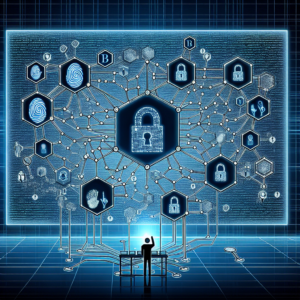
At the heart of Web3 lies decentralization, a concept that challenges the traditional centralized models of economic and digital governance. Decentralization in Web3 is achieved through distributed ledger technology, primarily blockchain, which records transactions across multiple nodes in a network. This ensures that no single entity has complete control over the data, enhancing security, transparency, and trust.
Decentralization empowers individuals by allowing them to own and control their digital identities and assets. In a smart economy, this translates into a more equitable distribution of resources and opportunities. Individuals can participate in economic activities without relying on centralized authorities, reducing the risk of censorship and manipulation.
Smart Contracts: Automating Trust
One of the most significant innovations driving the smart economy within Web3 is the advent of smart contracts. These self-executing contracts, with the terms of the agreement directly written into code, automate and enforce agreements without the need for intermediaries. Smart contracts operate on the principles of transparency and immutability, ensuring that all parties involved can trust the outcome without relying on third-party arbiters.
In a smart economy, smart contracts facilitate a wide range of applications, from financial transactions and supply chain management to real estate and legal agreements. By automating trust, smart contracts reduce costs, minimize human error, and increase efficiency, creating a more streamlined and reliable economic ecosystem.
Decentralized Finance (DeFi): Redefining Financial Systems
Decentralized Finance, or DeFi, is a key component of the smart economy revolution ushered in by Web3 innovations. DeFi leverages blockchain technology to recreate and enhance traditional financial systems in a decentralized manner. With DeFi, individuals can access a wide range of financial services, such as lending, borrowing, trading, and investing, without the need for traditional banks or financial intermediaries.
The impact of DeFi on the smart economy is profound. It democratizes access to financial services, allowing individuals from all walks of life to participate in economic activities that were previously restricted to a select few. Moreover, DeFi offers greater transparency and security, as all transactions are recorded on the blockchain, reducing the risk of fraud and manipulation.
Non-Fungible Tokens (NFTs): Transforming Ownership
Non-Fungible Tokens (NFTs) have emerged as a groundbreaking innovation within the Web3 ecosystem, transforming the concept of ownership in the digital age. Unlike traditional cryptocurrencies, which are fungible and interchangeable, NFTs are unique digital assets that represent ownership of a specific item or piece of content, such as art, music, or virtual real estate.
NFTs are revolutionizing the smart economy by enabling creators to monetize their digital creations directly, without relying on centralized platforms. This shift empowers artists, musicians, and content creators to retain control over their work and receive fair compensation for their efforts. Additionally, NFTs have the potential to redefine intellectual property rights and create new economic opportunities in the virtual and physical worlds.
Decentralized Autonomous Organizations (DAOs): Rethinking Governance
Decentralized Autonomous Organizations (DAOs) are reshaping the way organizations are structured and governed in the smart economy. DAOs leverage blockchain technology and smart contracts to enable decentralized decision-making, allowing stakeholders to participate in governance without the need for traditional hierarchical structures.
In a DAO, decisions are made collectively by token holders, who propose and vote on initiatives and policies. This democratic approach to governance enhances transparency and accountability, as all actions are recorded on the blockchain and accessible to all participants. DAOs have the potential to revolutionize industries by creating more inclusive and equitable organizational models that prioritize community interests.
Web3 and the Future of Work
The integration of Web3 innovations into the smart economy is also reshaping the future of work. As decentralized platforms gain prominence, traditional employment models are being challenged by new opportunities for remote and freelance work. Web3 enables individuals to monetize their skills and services directly, without relying on centralized platforms or intermediaries.
This shift towards a decentralized workforce offers greater flexibility and autonomy, allowing individuals to work on their terms and participate in a global economy. Moreover, the transparency and security provided by blockchain technology enhance trust and collaboration, fostering a more inclusive and dynamic work environment.
Challenges and Opportunities
While Web3 innovations hold immense potential to revolutionize the smart economy, they also present several challenges that must be addressed. One of the primary challenges is scalability, as blockchain networks must be able to handle a growing number of transactions without compromising speed or security. Additionally, regulatory uncertainty and legal frameworks must evolve to accommodate the decentralized nature of Web3 technologies.
Despite these challenges, the opportunities presented by Web3 are vast. By fostering innovation and inclusivity, Web3 has the potential to create a more equitable and sustainable economic ecosystem. As individuals gain greater control over their digital identities and assets, new business models and economic paradigms will emerge, driving growth and prosperity.
Conclusion
The revolutionizing of the smart economy with Web3 innovations is not just a technological advancement; it is a fundamental shift towards a more decentralized, transparent, and inclusive economic landscape. As blockchain technology, smart contracts, DeFi, NFTs, and DAOs continue to evolve, they will redefine how we interact, transact, and govern in the digital age.
While challenges remain, the potential benefits of Web3 innovations are too significant to ignore. By embracing this transformative technology, we can create a smart economy that empowers individuals, fosters innovation, and drives sustainable growth for future generations. The journey to a Web3-powered smart economy is just beginning, and the possibilities are limitless.
“`
#ChatGPT assisted in the creation of this article.