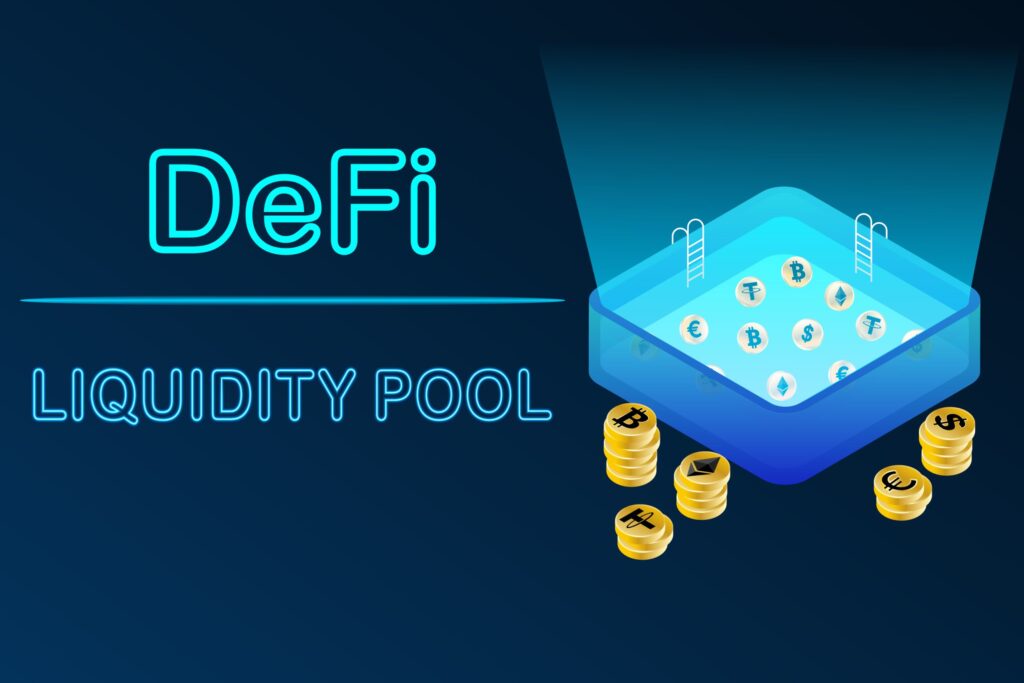
The financial landscape has undergone a significant transformation with the advent of decentralized finance (DeFi). This new frontier in finance aims to democratize access to financial services by removing traditional intermediaries and leveraging blockchain technology. Among the various innovations in DeFi, liquidity pools stand out as a pivotal game changer, enabling the efficient functioning of decentralized exchanges (DEXs) and other DeFi protocols.
Liquidity pools have unlocked new opportunities for investors, traders, and developers alike, offering a mechanism for providing liquidity in a decentralized manner. This article delves into the intricacies of liquidity pools, their role in DeFi, and the potential they hold for reshaping financial markets.
Understanding Liquidity Pools
At their core, liquidity pools are smart contracts that hold tokens and enable users to trade them directly on a decentralized platform. Unlike traditional order book models used in centralized exchanges, liquidity pools facilitate trading through an automated market maker (AMM) system. This system relies on mathematical formulas to determine prices and execute trades, ensuring continuous liquidity and eliminating the reliance on buyers and sellers to match orders.
A typical liquidity pool consists of two or more tokens paired together. Users, known as liquidity providers, contribute an equal value of each token to the pool, earning a share of the trading fees generated from transactions within the pool. This process not only incentivizes participation but also democratizes the role of market-making, traditionally reserved for financial institutions.
The Role of Liquidity Pools in DeFi
Liquidity pools are the backbone of decentralized exchanges, providing the necessary liquidity for seamless trading. They eliminate the reliance on centralized entities and offer users greater control over their assets. Here are some key roles liquidity pools play in the DeFi ecosystem:
1. Enabling Decentralized Trading
Liquidity pools facilitate the trading of digital assets without the need for a central authority. This decentralization allows for faster transactions, reduced costs, and increased accessibility for users worldwide. Additionally, liquidity pools provide continuous liquidity, reducing the volatility and slippage often experienced in traditional markets.
2. Yield Farming and Staking Opportunities
DeFi protocols often offer yield farming and staking opportunities, where users can earn rewards by providing liquidity to pools. These incentives attract a significant number of participants, further enhancing the liquidity and stability of the ecosystem. Yield farming has become a popular strategy for investors seeking to maximize their returns in the DeFi space.
3. Democratizing Market-Making
In traditional finance, market-making is dominated by large institutions with significant capital reserves. Liquidity pools democratize this process by allowing anyone to become a liquidity provider. By contributing tokens to a pool, individuals can earn a portion of the trading fees, effectively becoming market makers in the decentralized ecosystem.
The Advantages of Liquidity Pools
Liquidity pools offer several advantages over traditional financial systems, making them a crucial component of the DeFi landscape:
1. Reduced Counterparty Risk
In centralized exchanges, users must trust the platform to hold and secure their funds. Liquidity pools eliminate this counterparty risk by enabling peer-to-peer transactions directly on the blockchain. Users retain control of their assets, reducing the likelihood of hacks or mismanagement by a central authority.
2. Increased Accessibility
Liquidity pools lower the barriers to entry for users seeking to trade or provide liquidity. Without the need for extensive documentation or verification processes, individuals from around the world can participate in the DeFi ecosystem with ease. This accessibility is particularly beneficial for individuals in regions with limited access to traditional financial services.
3. Enhanced Transparency
Blockchain technology ensures the transparency and immutability of transactions within liquidity pools. Users can verify the composition of a pool, track trading volumes, and monitor the distribution of rewards. This transparency fosters trust among participants and encourages greater participation in the DeFi ecosystem.
Challenges and Risks
Despite their advantages, liquidity pools are not without challenges and risks. Understanding these factors is crucial for participants in the DeFi space:
1. Impermanent Loss
Impermanent loss is a risk faced by liquidity providers when the relative price of assets in a pool changes. This occurs because the AMM system automatically adjusts the token ratios to maintain equilibrium. While liquidity providers earn fees, the potential loss from price fluctuations can offset these gains, particularly in highly volatile markets.
2. Smart Contract Vulnerabilities
Liquidity pools operate on smart contracts, which are susceptible to bugs and vulnerabilities. A flaw in the code can lead to significant losses for liquidity providers and traders. It is essential for DeFi protocols to undergo rigorous audits and security checks to minimize these risks.
3. Market Volatility
The DeFi market is inherently volatile, with token prices fluctuating rapidly. Liquidity providers must be aware of the risks associated with market swings and adjust their strategies accordingly. Additionally, sudden shifts in market sentiment can lead to liquidity crises, affecting the overall stability of the ecosystem.
The Future of Liquidity Pools
As the DeFi ecosystem continues to evolve, liquidity pools are poised to play an even more significant role in the financial landscape. Several trends and developments are shaping the future of liquidity pools:
1. Cross-Chain Liquidity
Interoperability between different blockchain networks is a key focus for the DeFi space. Cross-chain liquidity pools enable seamless trading and asset transfers across multiple blockchains, enhancing the overall efficiency and accessibility of the ecosystem.
2. Advanced AMM Models
As the DeFi space matures, more sophisticated AMM models are being developed to optimize trading efficiency and reduce impermanent loss. These models incorporate dynamic pricing algorithms and leverage external data sources to enhance the accuracy of price calculations.
3. Integration with Traditional Finance
The integration of DeFi with traditional finance is an emerging trend that could unlock new opportunities for liquidity pools. By bridging the gap between decentralized and centralized systems, liquidity pools can facilitate the seamless flow of assets and liquidity across different financial ecosystems.
Conclusion
Liquidity pools have emerged as a transformative force in the DeFi landscape, unlocking new possibilities for financial innovation and inclusion. By democratizing market-making and providing continuous liquidity, these pools have reshaped how assets are traded and managed in the decentralized ecosystem.
While challenges and risks remain, the potential of liquidity pools to drive the future of finance is undeniable. As the DeFi space continues to evolve, liquidity pools will undoubtedly play a crucial role in shaping the next generation of financial services, offering unprecedented opportunities for users worldwide.